


In Denver, the Jewish community is once again living with a familiar dread—the sense that the ground is shifting under their feet while too many look away.
Melat Kiros, a 29-year-old Democratic Socialist, just defeated 15-term Congresswoman Diana DeGette in Colorado’s 1st Congressional District primary. Progressives celebrated the upset as proof that voters demand bold change on housing, healthcare, and inequality.
Local Jewish leaders heard something else entirely: the normalization of rhetoric that treats Jewish self-determination as the root of violence and Jewish safety as negotiable.
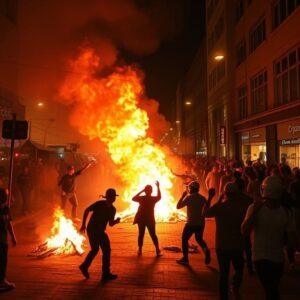
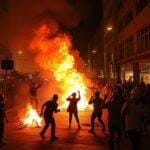
Kiros has described the October 7 Hamas massacre as “inevitable.” She initially refused to call the 2025 Boulder firebombing—an attack that killed 82-year-old Karen Diamond and injured a dozen others at a peaceful pro-Israel gathering—antisemitic. The perpetrator had planned for a year to “kill all Zionist people” while yelling “Free Palestine.” When pressed, Kiros condemned the violence but later framed rising antisemitism as a consequence of “the actions of Israel.” To many in Denver’s Jewish community, that sequence felt less like moral clarity and more like a shrug.
Rabbi Menachem Lehrfield of the Jewish Outreach Initiative put the fear into words. After Kiros’s victory, he posted that “simply wearing a yarmulke on Denver streets suddenly felt dangerous”.
Antisemitic replies flooded in!
Within a day of publishing an op-ed about that atmosphere, a driver rolled down a window and screamed “dirty Jew” at him. “I don’t know what’s going to happen next time,” he said. “I don’t know if next time, instead of hurling vile words, they’ll be hurling an explosive.” The memory of Boulder is still raw.
This is not abstract. The DSA seems to be demonizing the Jewish state as uniquely illegitimate, while soft-pedaling attacks on Jews in American streets crosses a different line. Jewish leaders emphasize the distinction. “There’s a big difference between criticizing Israel and saying it doesn’t have a right to exist,” Lehrfield noted. When that distinction collapses in mainstream politics, everyday safety erodes.
In 2026, the vehicle is democratic socialism’s rising influence and a willingness to treat October 7 as understandable blowback rather than mass murder. The result is the same quiet calculation Jewish families have made across centuries: Is it safe to be visibly Jewish here?
Denver’s Jews are not imagining the tension. They are living it.
And the rest of the country should notice that the same rhetoric now travels under progressive banners once again.
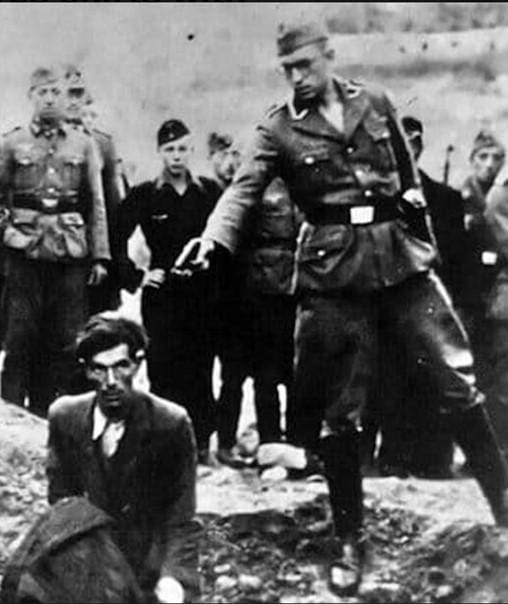
True Christians have long stood by the side of the Jewish community; will they once again stand with them in Denver and across America, or shall they let their Jewish friends be crucified?