




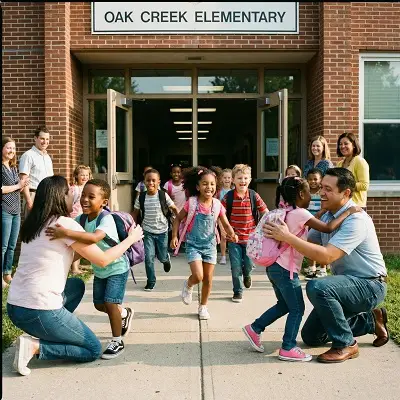
To the chagrin of political warlords, the court has ruled that children in the care of a school system shall not be considered government property, but remain children of their parents.
In a landmark decision that resonates with families across America, the U.S. Supreme Court has firmly reminded educators and policymakers that children are not wards of the state. The ruling in ‘Mirabelli v. Bonta’ blocks a controversial California policy allowing schools to withhold information from parents about their children’s gender identity struggles.
This victory illuminates a growing truth for parents: schools have been overstepping boundaries, treating kids as if they belong to the government rather than their families. By declaring parental involvement paramount, the Court has exposed how such secrecy undermines the foundational role of parents in guiding their children’s lives.
The case stems from California’s 2023 law, which encouraged educators to keep parents in the dark if a student expressed confusion about their sexual orientation or gender identity. Proponents argued it protected student privacy and safety, but critics saw it as an insidious erosion of family autonomy. The policy effectively positioned schools as surrogate decision-makers, sidelining parents, who, as the Supreme Court noted, are “the primary protectors of children’s best interests.” In its ruling, the Court dismantled the state’s defense, stating bluntly that policies prioritizing secrecy over transparency “cut out” parents from crucial aspects of their kids’ well-being.
At the heart of the legal battle are two dedicated teachers, Elizabeth Mirabelli and Lori West, who refused to comply with directives they viewed as unethical. Placed on administrative leave for prioritizing honesty with parents, they challenged the policy in court. A federal judge in December 2025 ruled that California’s approach violated parents’ Fourteenth Amendment rights to care for and make health decisions for their children. It also burdened First Amendment protections by interfering with parents’ ability to instill religious or moral values.
The judge’s words were scathing. Teachers were “compelled to violate their sincerely held beliefs” by being forced to hide information vital to student welfare. An appeals court temporarily reinstated the policy, but the Supreme Court’s intervention has paused it pending further review.
Organizations like the Becket Fund for Religious Liberty and the California Family Council (CFC) have hailed the decision as a triumph for family values. Becket’s President Mark Rienzi emphasized that “parents’ fundamental right to raise their children according to their faith doesn’t stop at the schoolhouse door.” He criticized California for attempting to “cut parents out of their children’s lives” while forcing teachers into complicity. Similarly, CFC’s statement underscored the ruling’s vindication of parental involvement in decisions about mental, emotional, and physical health. “This reaffirms that parents have the constitutional right to know and participate,” they declared, echoing a sentiment shared by many who see government overreach in education as a threat to American freedoms.
This ruling comes amid broader debates about how schools treat and teach children. Across the nation, parents have grown increasingly vigilant, uncovering curricula and policies that seem to prioritize ideological agendas over transparency. From critical race theory discussions to mental health interventions without consent, families are demanding accountability. The Supreme Court’s stance sends a clear message: children do not belong to the government. Schools are partners in education, not substitutes for parental authority. This truth has empowered parents to question secretive practices, fostering a movement where moms and dads reclaim their role as the ultimate guardians.
The implications extend beyond gender issues. If schools can hide something as profound as a child’s identity crisis, what else might they conceal? Health concerns, behavioral problems, or even academic struggles could fall under similar veils of “privacy.”
The Court’s decision encourages open dialogue, ensuring parents aren’t blindsided. It also protects educators like Mirabelli and West, who shouldn’t be forced to choose between their jobs and their conscience.
As this case continues in lower courts, it serves as a beacon for parental rights advocates. In an era where trust in institutions wanes, the ruling restores faith that the judiciary can safeguard families from bureaucratic intrusion.
Parents now have a stronger legal footing to insist on involvement, reminding everyone that raising children is a sacred duty—not a government prerogative. This awakening to the truth about school practices could reshape education, prioritizing partnership over paternalism.
Ultimately, it’s a win not just for California families, but for the principle that children thrive best under the loving guidance of their parents, free from the state’s shadow.